Wine and dine
March 12, 2026

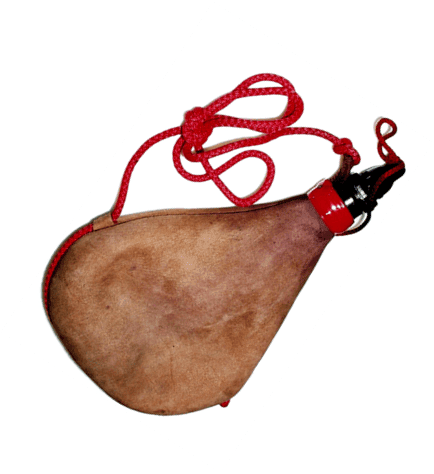
When it came to sneaking your booze in someplace, it often began with the humble wineskin. What started as a must have item for skiers in the ’60s and ’70s, soon became a fashionable and functional accessory. Not to mention cheeky.
These days you’re probably not smuggling your libations of choice in anywhere, but you may be wondering about the etiquette for bringing your own wine to your favourite restaurant. This handy guide from Food & Wine has you covered.
Just don’t spill it ;)
(Love nostalgia? Play today’s trivia below. You could win a $25 eGift Card!)
Good morning Staker! Here’s what’s cookin’ today. How scammers are using the news to trick their targets, what’s a baby Guinness, why handwriting is better than typing, and the origin of the simple ‘hello’ 👋
Let’s get into it!
SCAM
Criminals are using current events to scam people
Unsplash
A survey recently conducted by Interac found fraudsters are increasingly using current events to make consumers anxious, while trying to fool them into clicking nefarious links.
Interac surveyed 1,500 people and found 58% have been targeted in the last six months by scams claiming that their packages have been tied up at the border, and are being withheld due to unpaid import fees.
Those behind these schemes will often pose as delivery service representatives or border agents, and encourage their victims to click links and make the necessary payments. Sometimes they’ll simply be looking for information like addresses or emails in order to set them up for another scam down the line.
Interac says the typical methods of scam detection are becoming less reliable because bad actors are now using those very methods to warn victims about scams when, in reality, they’re actually attempting to execute them.
It’s important to never click on links from unknown senders, especially when they involve financial information. If you receive such messages at a time when you actually are expecting a package and you’re concerned about its shipping status, you can proactively reach out to the source of the transaction using the receipt or email you received when you made the purchase.
THIRSTY THURSDAYS
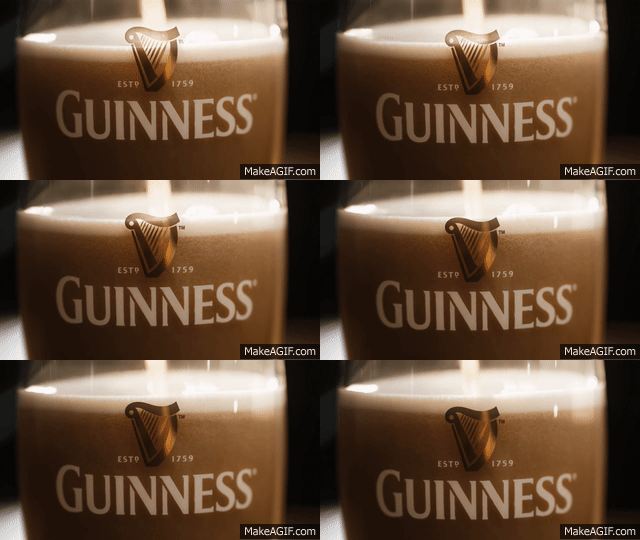
A Baby Guinness you say?
MakeAGif
St. Paddy’s day is next week which means demand for Guinness is about to reach its annual peak on this side of the pond.
With that in mind, perhaps you’d like to indulge while conserving supplies. Luckily, there’s a hack for that and it’s called the Baby Guinness.
In reality, a Baby Guinness doesn’t contain any beer at all, but it is an Irish beverage in a shot glass that looks exactly like a tiny pint of the black stuff.
Miniaturizing things is often associated with the Island of Saints and Scholars, and the Baby Guinness is one example likely created in the mid-1990s when after-dinner liqueurs exploded in popularity and Bailey’s Irish Cream became an international sensation.
We’ll keep this one short and sweet, just like a baby. To make the drink, grab yourself some coffee liqueur, and pour two ounces into a shooter; its sugar-dense composition will make sure it sits as the base. Next, spread half an ounce of Irish cream on top using the back of a spoon, and you’ve got yourself a Baby Guinness.
Sláinte!
SCIENCE
Why we learn more from writing than typing
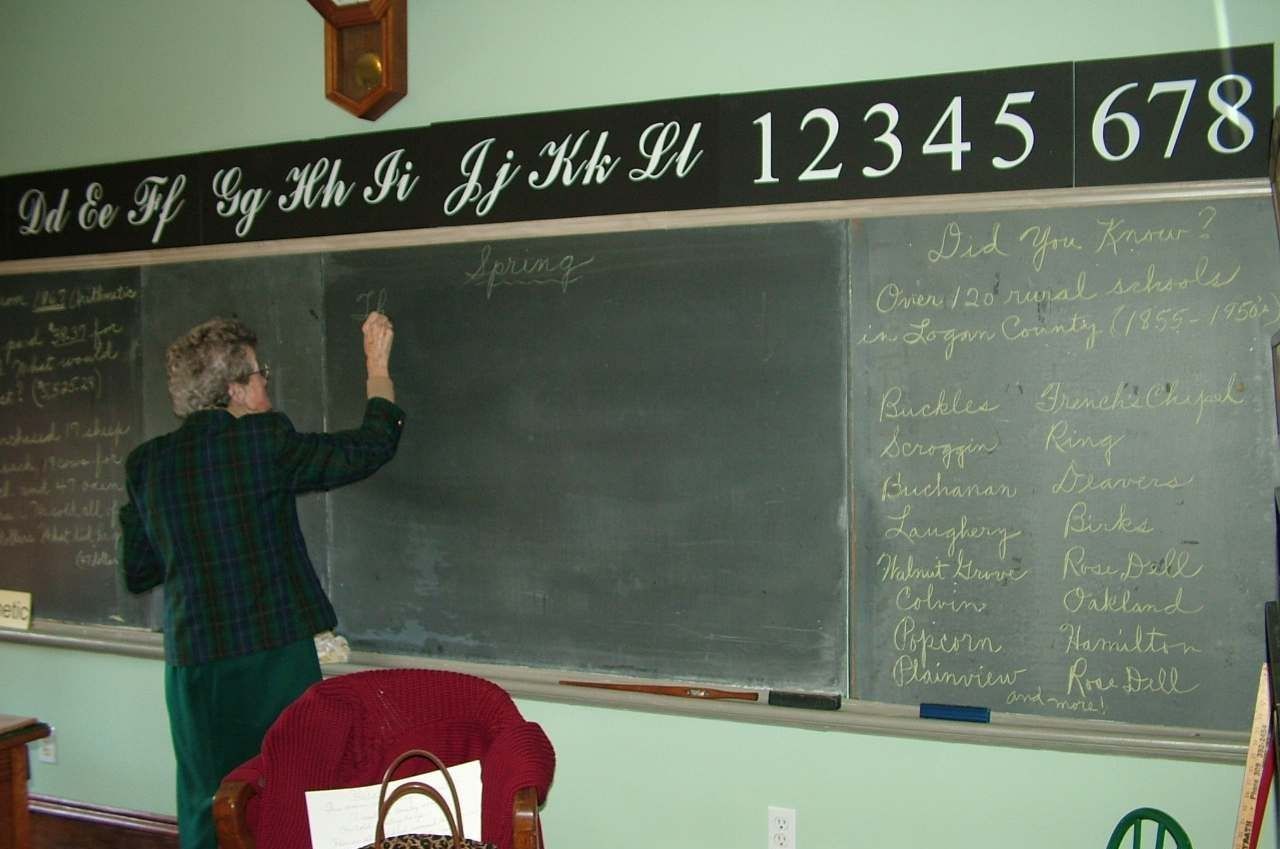
Efforts to equip students with computers at as young an age as possible have been going on for a couple decades, but scientific research suggests this might not be a great idea.
Several studies in recent years have shown that writing by hand is a much better way of learning than typing for young children, adolescents, and even adults.
For young children, learning the alphabet is the foundation of literacy, which some say is the most direct predictor of success in all walks of life. If you can read, you can do most things; if you can’t read, you can’t do most things.
Writing by hand forces neural connections and sync-ups that don’t happen when we type.
"Handwriting is probably among the most complex motor skills that the brain is capable of," says Marieke Longcamp, a cognitive neuroscientist at Aix-Marseille Université.
It forces your brain to recall the mental structures of the letters you’re tracing out, while also working in sync with your finger tips to apply the correct pressure to the pen in order to trace the letter. On top of that, you’re also trying to write something that makes sense in the language you’re using. Not simple at all.
Typing requires distinct movements, but considerably fewer interconnected workings of the mind and body, while going at a speed that doesn’t force as much retention as the tactile nature of handwriting. Just ask your millennial kid how much they retained while using a laptop to take notes in school.
HEALTH
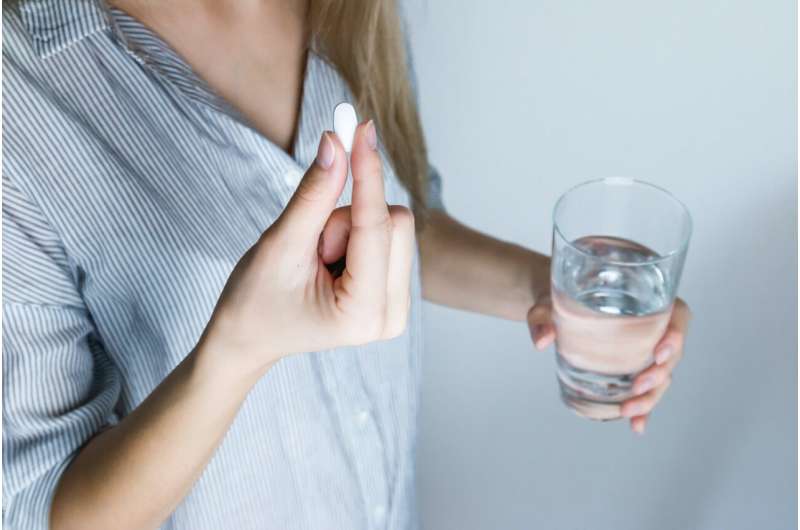
Daily multivitamin may slow biological aging
Pexels
A study published in Nature Medicine the other day investigated the effects of multivitamins on a trial group with an average age of 70.
The study found taking multivitamins daily for two years could slow biological aging by up to four months, with the effects even more noticeable for those whose markers already displayed accelerated biological aging.
The participants were people who took multivitamins every day for two years and were selected at random. Five biological “clocks” in their bloodstream were assessed at the beginning of the study, and again after one year and two years.
Biological clocks display various levels of DNA methylation—a type of pattern that forms and acts as a molecular tag on parts of the DNA’s genome. Biological aging is known to be associated with increases or decreases in methylation, depending on the clock.
Two of the five clocks were noticeably impacted by the multivitamin regimen adopted by the participants, indicating at least two examples of slowed biological aging.
The study’s authors conceded the degree to which aging was slowed wasn’t of major significance, but they did assert that it produced concrete evidence that these types of supplements can have positive measurable impacts.
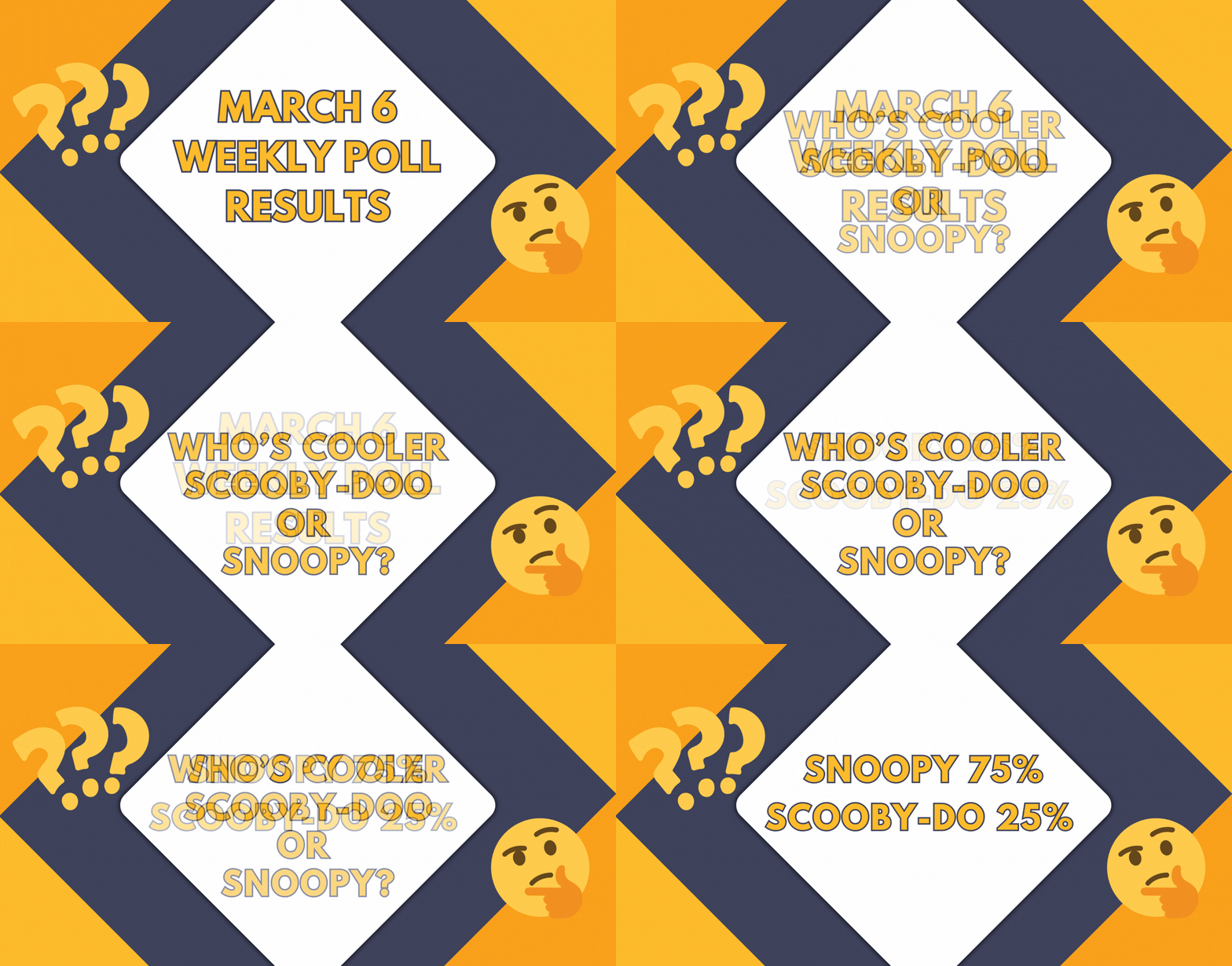
OUR WEEKLY POLL
Here’s what you said
CURIOSITIES
Where did “hello” come from?
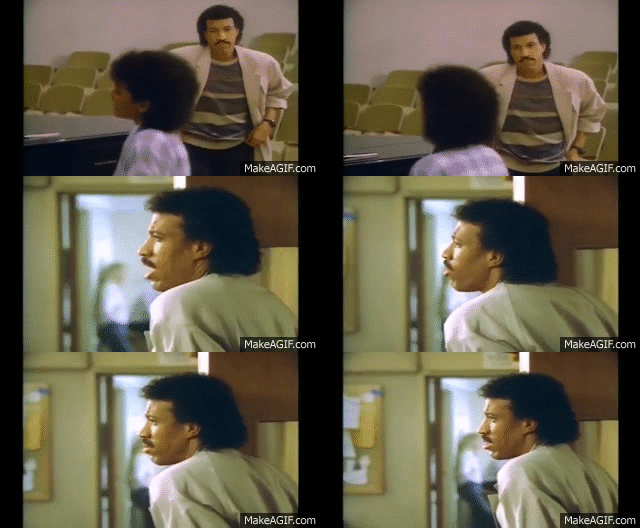
The only time you might hear someone using the word “hello” these days is when they’re answering the phone. Either that or when they’re belting out Lionel Ritchie, at full volume, while driving 😜
But answering a call is actually the origin of the modern usage of the term, with Thomas Edison himself claiming to have invented the word to address an unnamed person at the other end of a contraption called the telephone.
Words like “hi,” “hey,” “howdy,” and even “holler” all have much more commonplace modern usage, and trace their roots differently.
The deepest roots of the “hello” greeting track back only a few hundred years, despite the English language actually existing for about 1,000. For example, the word “hail” was used at one point in time as a greeting or a call to admire upon someone’s arrival.
Plenty examples of each can be found in the works of a guy named William Shakespeare, who used “hail to your grace” in King Lear, and of course, “Hail, Caesar!” in Julius Caesar.
Interestingly enough, while Thomas Edison may claim to have coined “hello,” the telephone’s actual inventor, Alexander Graham Bell, much preferred a different salutation: “Ahoy!”
STAKE TRIVIA
Guess that lyric!

MakeAGif
Time for another round of guess the lyric, with today’s trivia! Complete the game and earn a shot at a $25 eGift Card ;)
Winner will be notified on Friday afternoon. Keep an eye on your inbox and don’t forget to check your spam folder! *
Have a great day ahead Staker!
Today’s issue written by Michael Cowan, Joey Cowan, and Maureen Norman.
*SEE FULL STAKE TRIVIA CONTEST RULES HERE.