The club circuit
November 18, 2026


Back in 1986, you were probably excited to see the new Harold Ramis film, Club Paradise. Unfortunately, the stacked cast couldn’t save it from being a bit of a dud, but c’mon, it was still worth it to see Robin Williams, Peter O’Toole, and a full on SCTV reunion 😏
It’s often bonds between people that make things worthwhile, but forming strong connections can be hard. It doesn’t have to be though. According to a leading psychologist, joining a club is the simplest and most surefire way to build deep connections.
That’s what clubs are for ;)
(Love nostalgia? Play today’s trivia below!)
Good morning Staker! Here’s what’s cookin’ today. Multitasking might be slowing you down; there’s a new Bond in town; and dogs basically get a dopamine hit when you smile at them.
Let’s get into it!
WHAT UP WEDNESDAYS
Rare condition causes man to see his cat’s face on people

Cortex
A man in the American northeast known simply as “Karl” had a tangle of blood vessels in his brain that required surgical intervention. The operation involved the removal of a portion of his right temporal lobe, which is responsible for facial recognition.
Researchers behind a study published in Cortex believe this explains why Karl has been experiencing an illusion that sounds like something out of an Alice in Wonderland meets Fear and Loathing in Las Vegas story.
For about two years, Karl has been seeing his cat’s face when he looks into the faces of other people. When he sees another person first on any given day, that person’s face ends up appearing in his cat’s.
This is broadly known as palinopsia (when something is seen and then persists later in a person’s ongoing perception), but because Karl’s case also involves facial distortions, it’s a condition called prosopometamorphopsia.
"Aside from their unusual combinations of features, the resulting faces appear entirely coherent. The transferred features are seamlessly integrated into the viewed face rather than appearing superimposed, and they change naturally as viewpoint or distance shifts," the researchers wrote in their paper.
WORKING
Why juggling many things slows you down

Tenor
A business leader in charge of product development, tax filings, and updating the board of directors—all while managing a team of underlings—has a lot going on, and when any one of those priorities falls out of sync with its usual routine, the ripple effects can almost be better described as cripple effects.
A 2001 study had participants switch back and forth between sorting shapes and solving math problems, and when they were abruptly told to switch, the work took longer, particularly as the tasks became more difficult.
The lesson wasn’t that the difficulty of each task caused the work to take longer, but that the context switching required mental gymnastics that actually made each thing harder.
Tasks would need to be completed once participants were instructed to switch back to them, but the context switching without warning made it difficult for participants to seamlessly pick back up where they left off.
A 2018 follow-up study by the same researchers introduced a method called “ready-to-resume,” which involved participants taking note of where they were and how they would pick a task back up when they were forced to leave it unfinished.
The study found this method was useful in alleviating the stress of context switching, and helped bridge the mental divide often left by juggling.
PETS
What happens when you smile at your pooch

Unsplash
A study published over the summer by researchers at the University of Vienna found the region of a dog’s brain associated with reward will become active when it perceives a human’s positive emotions.
In other words, smiling at a dog gives it a hit of dopamine similar to the one a person will experience when they win a competition or receive a compliment.
The researchers conducted brain imaging on 14 dogs, and assessed the internal response when shown pictures of humans displaying various emotions. Pictures of humans smiling made the parts of their brains associated with good memories light up (like when receiving a treat or affectionate affirmation).
Past research confirmed the motivational properties of this part of a dog’s brain, which reinforce their behaviour when presented with the opportunity for a treat.
Interestingly, the team also found that while the dogs were able to identify and react to a human smile as a positive, they weren’t able to detect the differences between negative emotions like sadness, anger, or fear.
ENTERTAINMENT
ICYMI, there’s a new 007

Jaap Buitendijk
Robert Pattinson will officially be the seventh actor to play the iconic British spy known as Bond….James Bond (code name: 007).
Daniel Craig stepped down after 2021’s No Time To Die, creating a speculative vacuum for half a decade that Amazon MGM finally filled the other day with the Pattinson announcement.
“James Bond is one of the most legendary characters in cinema, and to be entrusted with 007 is the honour of a lifetime,” Pattinson said in a statement.
Landing the coveted Bond role is somewhat of a comeback for Pattinson. The Brit rose to prominence with his role in film adaptations of the Twilight books, and with the exception of his surprise casting as Batman in 2022’s The Batman, he’s largely taken on roles in independent films.
STAKE TRIVIA
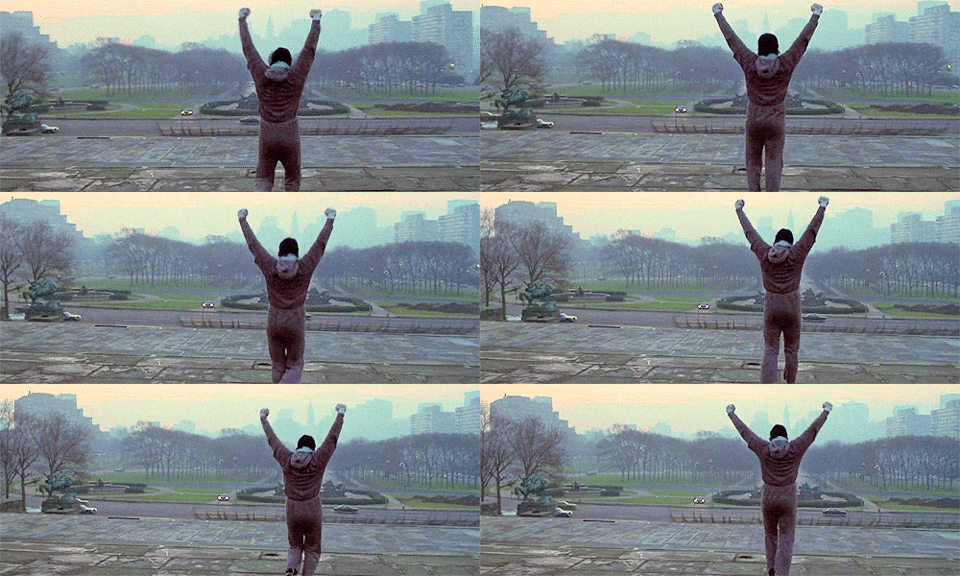
Who’s on first?
Giphy
You might think you know what movie came first, but let’s see how right you are, with today’s trivia.
Complete the game and earn an entry for our weekly $100 Amazon e-gift card giveaway.
Winner will be notified on Monday November 23rd. Keep an eye on your inbox and don’t forget to check your spam folder!*
Have a great day ahead Staker!
Today’s issue written by Michael Cowan, Joey Cowan, and Maureen Norman.